What is Payment Orchestration? The B2B Guide to Global Settlement
What is Payment Orchestration? The B2B Guide to Global Settlement
What is Payment Orchestration? The B2B Guide to Global Settlement

In the fragmented world of global trade, relying on a single banking partner or payment gateway is a vulnerability your balance sheet cannot afford. For CFOs and Treasurers operating in emerging markets, from LATAM to Southeast Asia, the challenge isn't just accepting payments; it is optimising the movement of value to reduce fees and accelerate settlement.
This is where payment orchestration shifts from being a technical buzzword to a critical financial infrastructure.
Whether you are looking to bypass the "intermediary tax" of legacy banking or integrate stablecoin rails alongside traditional fiat, understanding orchestration is the first step toward modernising your financial stack.
What you will learn
The technical definition of payment orchestration and how it differs from a standard PSP.
How smart routing can reduce cross-border transaction fees by up to 80%.
The role of stablecoins and crypto rails in modern orchestration layers.
Real-world use cases for B2B supply chains and marketplaces.
What is payment orchestration?
Payment orchestration is a technical software layer that acts as a central hub, integrating and managing multiple payment service providers (PSPs), acquiring banks, and payment methods through a single interface. Rather than building separate connections to every bank or gateway, a business connects to the orchestration layer, which then routes the transaction to the best available provider.
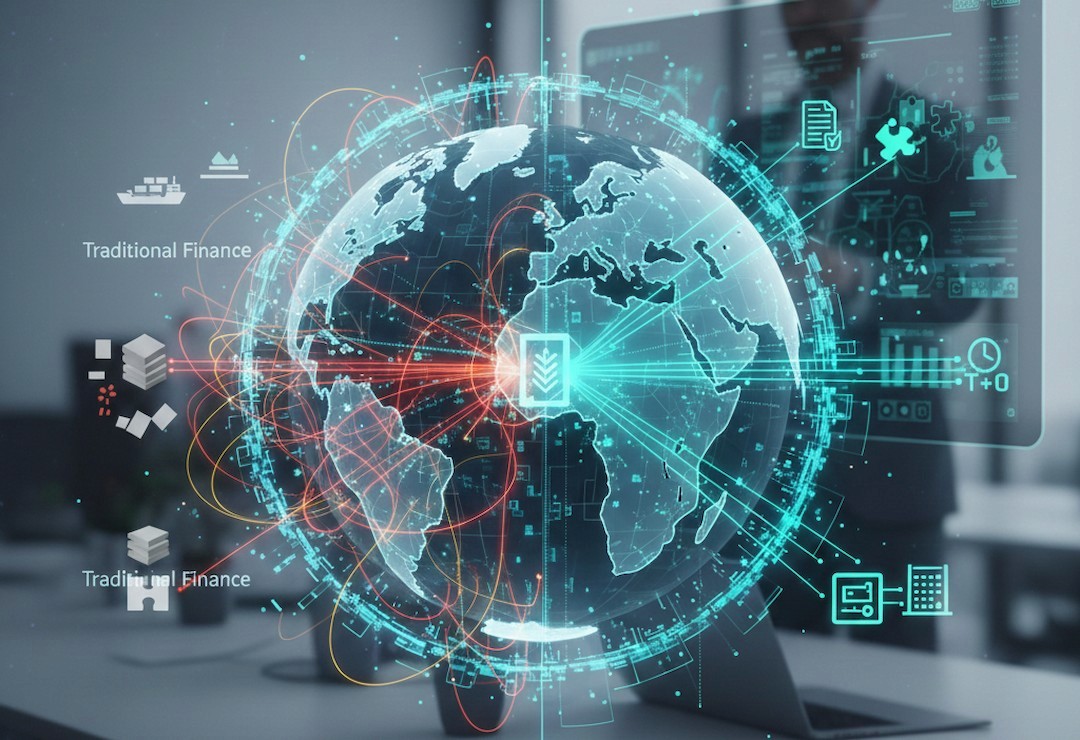
Think of it as a "traffic controller" for your money. In a traditional setup, a transaction flows linearly: Checkout > Gateway > Processor > Bank. If any link in that chain fails, the transaction fails.
In a payment orchestration model, the system analyzes the transaction in real-time and asks:
Which provider offers the lowest fee for this currency?
Which rail is currently online and stable?
Is this a domestic transfer or a cross-border settlement?
Based on these rules, it dynamically routes the payment. For Damisa’s clients, this definition extends beyond card processing. It involves orchestrating between fiat rails (SWIFT, SEPA, Pix) and digital finance rails to ensure instant settlement.
The evolution from Gateway to Orchestration
To understand what is payment orchestration in a modern context, we must look at the evolution of the stack:
1.0 Single Gateway: The merchant is locked into one provider (e.g., a standard bank). High fees, single point of failure.
2.0 Multi-Acquiring: The merchant manually builds connections to 2–3 gateways. High technical debt and maintenance.
3.0 Payment Orchestration: A single API connects to unlimited providers, including fiat-backed stablecoins and local APMs (Alternative Payment Methods).
Note: For a deeper dive into how this evolution impacts your bottom line, read our analysis on Why My PSP Peers Are Leaving Money on the Table.
How does payment orchestration work in B2B?
While e-commerce focuses on checkout speed, B2B payment orchestration focuses on liquidity and settlement finality. The process typically follows these four stages:
Initiation and Authentication
The transaction is initiated via an invoice or a B2B checkout. The orchestration layer validates the request. If you are dealing with large volume settlements, security is paramount. This is where advanced infrastructure comes into play.
Learn more about Wallet as a service here: What is Wallet as a Service? The Executive Guide to Embedded Finance.
Smart Routing (The Decision Engine)
This is the core of the system. The orchestrator looks at the parameters of the deal.
Scenario A: A domestic payment in Brazil. The router selects Pix for instant, low-cost settlement.
Scenario B: A cross-border payment from Nigeria to China. The router identifies that SWIFT will take 4 days and cost 3%. Instead, it routes the transaction via Stablecoin Rails to Power Payouts, achieving T+0 settlement.
Processing and Transformation
The payment is processed. In sophisticated B2B setups, this might involve an automated conversion. The system might accept local currency, convert it via On-ramps and Off-ramps into a digital dollar (USDC/USDT), and settle the supplier instantly.
Unified Reconciliation
Perhaps the biggest headache for Finance Directors is reconciling payments across five different bank statements.
Payment orchestration unifies this data. Regardless of whether the payment went through a local bank, a crypto rail, or a credit card network, it appears on a single dashboard with standardised reporting.
Key benefits of payment orchestration for global trade
Why should a B2B enterprise invest in this infrastructure? The ROI is usually found in three specific areas: Cost, Redundancy, and Reach.
Significant reduction in transaction costs
The "intermediary tax" of correspondent banking devours margins. By utilizing an orchestration layer that includes blockchain capabilities, businesses can leverage B2B Crypto Payments to bypass legacy fees.
Dynamic Currency Conversion: Avoid forced FX rates from banks by routing to providers with better spreads.
Fee Arbitration: Automatically route transactions to the provider with the lowest agreed rate for that specific card type or region.
Redundancy and risk mitigation
If your primary banking partner halts operations or flags a compliant transaction erroneously, a common occurrence in emerging markets—your supply chain stops.
Payment orchestration provides automatic failover. If Provider A is down, the traffic reroutes to Provider B instantly. This ensures business continuity and protects your reputation with suppliers.
Access to emerging markets
Global trade is shifting toward LATAM, Africa, and Southeast Asia.
These regions often do not rely on SWIFT or cards. They rely on mobile money and real-time payment networks. An orchestration platform allows you to plug into these local methods without opening local entities in every country.
The role of Stablecoins in modern orchestration
Standard definitions of what is payment orchestration often ignore the biggest innovation in fintech: the blockchain.
For Damisa, orchestration is incomplete without digital assets. A modern orchestration strategy allows a business to hold capital in a Fiat-Backed Stablecoin and disperse it globally without touching the SWIFT network until the very last mile.
Improving liquidity with T+0 settlement
In commodity trading and logistics, time is money. Waiting for funds to clear can result in massive demurrage charges at ports. By integrating stablecoin rails into your orchestration layer, you can achieve atomic settlement—payment upon delivery—eliminating delays.
You can see a practical application here: How Can Stablecoins Help Address Demurrage Costs in Global Supply Chains?.
Automating trust with smart contracts
Advanced orchestration goes beyond routing; it automates conditions.
Using Smart Contracts for Commodity Trading, payments can be orchestrated to release automatically only when digital shipping documents are verified, replacing the slow and expensive Letter of Credit.
Frequently Asked Questions We Received About Payment Orchestration
Is payment orchestration the same as a payment gateway?
No.
A payment gateway is a single pipe connecting you to a processor. Payment orchestration is the hub that connects you to multiple gateways simultaneously. It sits above the gateways, managing which one gets used for each transaction.
Does payment orchestration replace my bank?
It does not replace your bank, but it reduces your dependency on a single banking relationship. It allows you to maintain accounts with multiple partners and manage them from one view.
For modern businesses, it also opens the door to The Best Stablecoin Payment Solution to augment banking limitations.
Is payment orchestration secure?
Yes, and often more secure than direct integrations. Most orchestration platforms handle the PCI-DSS compliance and tokenisation of sensitive data. This means your business does not store raw payment data, reducing your security burden.
How does this help with cross-border B2B payments?
It allows for "least-cost routing." The system can identify that a payment to a supplier in Brazil is cheaper via a local partner or a stablecoin transfer than a wire transfer from London. This can help you Cut Costs by 80% on Cross-Border Business Payments.
Can I use crypto rails without holding volatile assets?
Absolutely.
Modern orchestration allows for instant conversion. You send Fiat, the system converts to a stablecoin (like USDC) for transit, and the recipient receives Fiat. You benefit from the speed of crypto without the volatility.
For a deep dive please read: USDC vs USDT for Business: The CFO’s Guide to Safer Settlements.
Conclusion
The question "what is payment orchestration" has evolved. It is no longer just about ensuring a credit card transaction goes through on a Friday night. For the global B2B enterprise, it is about building a financial operating system that is resilient, cost-effective, and borderless.
By unifying traditional banking rails with the speed and efficiency of stablecoin infrastructure, businesses can unlock trapped liquidity and operate with the speed that the modern market demands.
Are you ready to modernise your payment stack?
Damisa provides the infrastructure to orchestrate seamless cross-border settlements, cutting costs and ensuring finality.
Contact us today to learn how we can optimise your global flows.
In the fragmented world of global trade, relying on a single banking partner or payment gateway is a vulnerability your balance sheet cannot afford. For CFOs and Treasurers operating in emerging markets, from LATAM to Southeast Asia, the challenge isn't just accepting payments; it is optimising the movement of value to reduce fees and accelerate settlement.
This is where payment orchestration shifts from being a technical buzzword to a critical financial infrastructure.
Whether you are looking to bypass the "intermediary tax" of legacy banking or integrate stablecoin rails alongside traditional fiat, understanding orchestration is the first step toward modernising your financial stack.
What you will learn
The technical definition of payment orchestration and how it differs from a standard PSP.
How smart routing can reduce cross-border transaction fees by up to 80%.
The role of stablecoins and crypto rails in modern orchestration layers.
Real-world use cases for B2B supply chains and marketplaces.
What is payment orchestration?
Payment orchestration is a technical software layer that acts as a central hub, integrating and managing multiple payment service providers (PSPs), acquiring banks, and payment methods through a single interface. Rather than building separate connections to every bank or gateway, a business connects to the orchestration layer, which then routes the transaction to the best available provider.
Think of it as a "traffic controller" for your money. In a traditional setup, a transaction flows linearly: Checkout > Gateway > Processor > Bank. If any link in that chain fails, the transaction fails.
In a payment orchestration model, the system analyzes the transaction in real-time and asks:
Which provider offers the lowest fee for this currency?
Which rail is currently online and stable?
Is this a domestic transfer or a cross-border settlement?
Based on these rules, it dynamically routes the payment. For Damisa’s clients, this definition extends beyond card processing. It involves orchestrating between fiat rails (SWIFT, SEPA, Pix) and digital finance rails to ensure instant settlement.
The evolution from Gateway to Orchestration
To understand what is payment orchestration in a modern context, we must look at the evolution of the stack:
1.0 Single Gateway: The merchant is locked into one provider (e.g., a standard bank). High fees, single point of failure.
2.0 Multi-Acquiring: The merchant manually builds connections to 2–3 gateways. High technical debt and maintenance.
3.0 Payment Orchestration: A single API connects to unlimited providers, including fiat-backed stablecoins and local APMs (Alternative Payment Methods).
Note: For a deeper dive into how this evolution impacts your bottom line, read our analysis on Why My PSP Peers Are Leaving Money on the Table.
How does payment orchestration work in B2B?
While e-commerce focuses on checkout speed, B2B payment orchestration focuses on liquidity and settlement finality. The process typically follows these four stages:
Initiation and Authentication
The transaction is initiated via an invoice or a B2B checkout. The orchestration layer validates the request. If you are dealing with large volume settlements, security is paramount. This is where advanced infrastructure comes into play.
Learn more about Wallet as a service here: What is Wallet as a Service? The Executive Guide to Embedded Finance.
Smart Routing (The Decision Engine)
This is the core of the system. The orchestrator looks at the parameters of the deal.
Scenario A: A domestic payment in Brazil. The router selects Pix for instant, low-cost settlement.
Scenario B: A cross-border payment from Nigeria to China. The router identifies that SWIFT will take 4 days and cost 3%. Instead, it routes the transaction via Stablecoin Rails to Power Payouts, achieving T+0 settlement.
Processing and Transformation
The payment is processed. In sophisticated B2B setups, this might involve an automated conversion. The system might accept local currency, convert it via On-ramps and Off-ramps into a digital dollar (USDC/USDT), and settle the supplier instantly.
Unified Reconciliation
Perhaps the biggest headache for Finance Directors is reconciling payments across five different bank statements.
Payment orchestration unifies this data. Regardless of whether the payment went through a local bank, a crypto rail, or a credit card network, it appears on a single dashboard with standardised reporting.
Key benefits of payment orchestration for global trade
Why should a B2B enterprise invest in this infrastructure? The ROI is usually found in three specific areas: Cost, Redundancy, and Reach.
Significant reduction in transaction costs
The "intermediary tax" of correspondent banking devours margins. By utilizing an orchestration layer that includes blockchain capabilities, businesses can leverage B2B Crypto Payments to bypass legacy fees.
Dynamic Currency Conversion: Avoid forced FX rates from banks by routing to providers with better spreads.
Fee Arbitration: Automatically route transactions to the provider with the lowest agreed rate for that specific card type or region.
Redundancy and risk mitigation
If your primary banking partner halts operations or flags a compliant transaction erroneously, a common occurrence in emerging markets—your supply chain stops.
Payment orchestration provides automatic failover. If Provider A is down, the traffic reroutes to Provider B instantly. This ensures business continuity and protects your reputation with suppliers.
Access to emerging markets
Global trade is shifting toward LATAM, Africa, and Southeast Asia.
These regions often do not rely on SWIFT or cards. They rely on mobile money and real-time payment networks. An orchestration platform allows you to plug into these local methods without opening local entities in every country.
The role of Stablecoins in modern orchestration
Standard definitions of what is payment orchestration often ignore the biggest innovation in fintech: the blockchain.
For Damisa, orchestration is incomplete without digital assets. A modern orchestration strategy allows a business to hold capital in a Fiat-Backed Stablecoin and disperse it globally without touching the SWIFT network until the very last mile.
Improving liquidity with T+0 settlement
In commodity trading and logistics, time is money. Waiting for funds to clear can result in massive demurrage charges at ports. By integrating stablecoin rails into your orchestration layer, you can achieve atomic settlement—payment upon delivery—eliminating delays.
You can see a practical application here: How Can Stablecoins Help Address Demurrage Costs in Global Supply Chains?.
Automating trust with smart contracts
Advanced orchestration goes beyond routing; it automates conditions.
Using Smart Contracts for Commodity Trading, payments can be orchestrated to release automatically only when digital shipping documents are verified, replacing the slow and expensive Letter of Credit.
Frequently Asked Questions We Received About Payment Orchestration
Is payment orchestration the same as a payment gateway?
No.
A payment gateway is a single pipe connecting you to a processor. Payment orchestration is the hub that connects you to multiple gateways simultaneously. It sits above the gateways, managing which one gets used for each transaction.
Does payment orchestration replace my bank?
It does not replace your bank, but it reduces your dependency on a single banking relationship. It allows you to maintain accounts with multiple partners and manage them from one view.
For modern businesses, it also opens the door to The Best Stablecoin Payment Solution to augment banking limitations.
Is payment orchestration secure?
Yes, and often more secure than direct integrations. Most orchestration platforms handle the PCI-DSS compliance and tokenisation of sensitive data. This means your business does not store raw payment data, reducing your security burden.
How does this help with cross-border B2B payments?
It allows for "least-cost routing." The system can identify that a payment to a supplier in Brazil is cheaper via a local partner or a stablecoin transfer than a wire transfer from London. This can help you Cut Costs by 80% on Cross-Border Business Payments.
Can I use crypto rails without holding volatile assets?
Absolutely.
Modern orchestration allows for instant conversion. You send Fiat, the system converts to a stablecoin (like USDC) for transit, and the recipient receives Fiat. You benefit from the speed of crypto without the volatility.
For a deep dive please read: USDC vs USDT for Business: The CFO’s Guide to Safer Settlements.
Conclusion
The question "what is payment orchestration" has evolved. It is no longer just about ensuring a credit card transaction goes through on a Friday night. For the global B2B enterprise, it is about building a financial operating system that is resilient, cost-effective, and borderless.
By unifying traditional banking rails with the speed and efficiency of stablecoin infrastructure, businesses can unlock trapped liquidity and operate with the speed that the modern market demands.
Are you ready to modernise your payment stack?
Damisa provides the infrastructure to orchestrate seamless cross-border settlements, cutting costs and ensuring finality.
Contact us today to learn how we can optimise your global flows.
In the fragmented world of global trade, relying on a single banking partner or payment gateway is a vulnerability your balance sheet cannot afford. For CFOs and Treasurers operating in emerging markets, from LATAM to Southeast Asia, the challenge isn't just accepting payments; it is optimising the movement of value to reduce fees and accelerate settlement.
This is where payment orchestration shifts from being a technical buzzword to a critical financial infrastructure.
Whether you are looking to bypass the "intermediary tax" of legacy banking or integrate stablecoin rails alongside traditional fiat, understanding orchestration is the first step toward modernising your financial stack.
What you will learn
The technical definition of payment orchestration and how it differs from a standard PSP.
How smart routing can reduce cross-border transaction fees by up to 80%.
The role of stablecoins and crypto rails in modern orchestration layers.
Real-world use cases for B2B supply chains and marketplaces.
What is payment orchestration?
Payment orchestration is a technical software layer that acts as a central hub, integrating and managing multiple payment service providers (PSPs), acquiring banks, and payment methods through a single interface. Rather than building separate connections to every bank or gateway, a business connects to the orchestration layer, which then routes the transaction to the best available provider.
Think of it as a "traffic controller" for your money. In a traditional setup, a transaction flows linearly: Checkout > Gateway > Processor > Bank. If any link in that chain fails, the transaction fails.
In a payment orchestration model, the system analyzes the transaction in real-time and asks:
Which provider offers the lowest fee for this currency?
Which rail is currently online and stable?
Is this a domestic transfer or a cross-border settlement?
Based on these rules, it dynamically routes the payment. For Damisa’s clients, this definition extends beyond card processing. It involves orchestrating between fiat rails (SWIFT, SEPA, Pix) and digital finance rails to ensure instant settlement.
The evolution from Gateway to Orchestration
To understand what is payment orchestration in a modern context, we must look at the evolution of the stack:
1.0 Single Gateway: The merchant is locked into one provider (e.g., a standard bank). High fees, single point of failure.
2.0 Multi-Acquiring: The merchant manually builds connections to 2–3 gateways. High technical debt and maintenance.
3.0 Payment Orchestration: A single API connects to unlimited providers, including fiat-backed stablecoins and local APMs (Alternative Payment Methods).
Note: For a deeper dive into how this evolution impacts your bottom line, read our analysis on Why My PSP Peers Are Leaving Money on the Table.
How does payment orchestration work in B2B?
While e-commerce focuses on checkout speed, B2B payment orchestration focuses on liquidity and settlement finality. The process typically follows these four stages:
Initiation and Authentication
The transaction is initiated via an invoice or a B2B checkout. The orchestration layer validates the request. If you are dealing with large volume settlements, security is paramount. This is where advanced infrastructure comes into play.
Learn more about Wallet as a service here: What is Wallet as a Service? The Executive Guide to Embedded Finance.
Smart Routing (The Decision Engine)
This is the core of the system. The orchestrator looks at the parameters of the deal.
Scenario A: A domestic payment in Brazil. The router selects Pix for instant, low-cost settlement.
Scenario B: A cross-border payment from Nigeria to China. The router identifies that SWIFT will take 4 days and cost 3%. Instead, it routes the transaction via Stablecoin Rails to Power Payouts, achieving T+0 settlement.
Processing and Transformation
The payment is processed. In sophisticated B2B setups, this might involve an automated conversion. The system might accept local currency, convert it via On-ramps and Off-ramps into a digital dollar (USDC/USDT), and settle the supplier instantly.
Unified Reconciliation
Perhaps the biggest headache for Finance Directors is reconciling payments across five different bank statements.
Payment orchestration unifies this data. Regardless of whether the payment went through a local bank, a crypto rail, or a credit card network, it appears on a single dashboard with standardised reporting.
Key benefits of payment orchestration for global trade
Why should a B2B enterprise invest in this infrastructure? The ROI is usually found in three specific areas: Cost, Redundancy, and Reach.
Significant reduction in transaction costs
The "intermediary tax" of correspondent banking devours margins. By utilizing an orchestration layer that includes blockchain capabilities, businesses can leverage B2B Crypto Payments to bypass legacy fees.
Dynamic Currency Conversion: Avoid forced FX rates from banks by routing to providers with better spreads.
Fee Arbitration: Automatically route transactions to the provider with the lowest agreed rate for that specific card type or region.
Redundancy and risk mitigation
If your primary banking partner halts operations or flags a compliant transaction erroneously, a common occurrence in emerging markets—your supply chain stops.
Payment orchestration provides automatic failover. If Provider A is down, the traffic reroutes to Provider B instantly. This ensures business continuity and protects your reputation with suppliers.
Access to emerging markets
Global trade is shifting toward LATAM, Africa, and Southeast Asia.
These regions often do not rely on SWIFT or cards. They rely on mobile money and real-time payment networks. An orchestration platform allows you to plug into these local methods without opening local entities in every country.
The role of Stablecoins in modern orchestration
Standard definitions of what is payment orchestration often ignore the biggest innovation in fintech: the blockchain.
For Damisa, orchestration is incomplete without digital assets. A modern orchestration strategy allows a business to hold capital in a Fiat-Backed Stablecoin and disperse it globally without touching the SWIFT network until the very last mile.
Improving liquidity with T+0 settlement
In commodity trading and logistics, time is money. Waiting for funds to clear can result in massive demurrage charges at ports. By integrating stablecoin rails into your orchestration layer, you can achieve atomic settlement—payment upon delivery—eliminating delays.
You can see a practical application here: How Can Stablecoins Help Address Demurrage Costs in Global Supply Chains?.
Automating trust with smart contracts
Advanced orchestration goes beyond routing; it automates conditions.
Using Smart Contracts for Commodity Trading, payments can be orchestrated to release automatically only when digital shipping documents are verified, replacing the slow and expensive Letter of Credit.
Frequently Asked Questions We Received About Payment Orchestration
Is payment orchestration the same as a payment gateway?
No.
A payment gateway is a single pipe connecting you to a processor. Payment orchestration is the hub that connects you to multiple gateways simultaneously. It sits above the gateways, managing which one gets used for each transaction.
Does payment orchestration replace my bank?
It does not replace your bank, but it reduces your dependency on a single banking relationship. It allows you to maintain accounts with multiple partners and manage them from one view.
For modern businesses, it also opens the door to The Best Stablecoin Payment Solution to augment banking limitations.
Is payment orchestration secure?
Yes, and often more secure than direct integrations. Most orchestration platforms handle the PCI-DSS compliance and tokenisation of sensitive data. This means your business does not store raw payment data, reducing your security burden.
How does this help with cross-border B2B payments?
It allows for "least-cost routing." The system can identify that a payment to a supplier in Brazil is cheaper via a local partner or a stablecoin transfer than a wire transfer from London. This can help you Cut Costs by 80% on Cross-Border Business Payments.
Can I use crypto rails without holding volatile assets?
Absolutely.
Modern orchestration allows for instant conversion. You send Fiat, the system converts to a stablecoin (like USDC) for transit, and the recipient receives Fiat. You benefit from the speed of crypto without the volatility.
For a deep dive please read: USDC vs USDT for Business: The CFO’s Guide to Safer Settlements.
Conclusion
The question "what is payment orchestration" has evolved. It is no longer just about ensuring a credit card transaction goes through on a Friday night. For the global B2B enterprise, it is about building a financial operating system that is resilient, cost-effective, and borderless.
By unifying traditional banking rails with the speed and efficiency of stablecoin infrastructure, businesses can unlock trapped liquidity and operate with the speed that the modern market demands.
Are you ready to modernise your payment stack?
Damisa provides the infrastructure to orchestrate seamless cross-border settlements, cutting costs and ensuring finality.
Contact us today to learn how we can optimise your global flows.
Category
News
Insights
Date Published
Jan 26, 2026
Written by

Damisaverse
Category
News
Insights
Date Published
Jan 26, 2026
Written by
Damisaverse
Category
News
Insights
Date Published
Jan 26, 2026
Written by
Damisaverse
Blog and articles
Latest insights and trends
Blog and articles
Latest insights and trends
Blog and articles
Latest insights and trends





Ready to elevate your business?

Easily adapt to changes and scale your operations with our flexible infrastructure, designed to support your business growth.
© 2026 Damisa Technologies. All rights reserved.
Ready to elevate your business?
Easily adapt to changes and scale your operations with our flexible infrastructure, designed to support your business growth.
© 2026 Damisa Technologies. All rights reserved.
Ready to elevate your business?
Easily adapt to changes and scale your operations with our flexible infrastructure, designed to support your business growth.
© 2026 Damisa Technologies. All rights reserved.