
What is Wallet as a Service? The Executive Guide to Embedded Finance
What is Wallet as a Service? The Executive Guide to Embedded Finance
What is Wallet as a Service? The Executive Guide to Embedded Finance
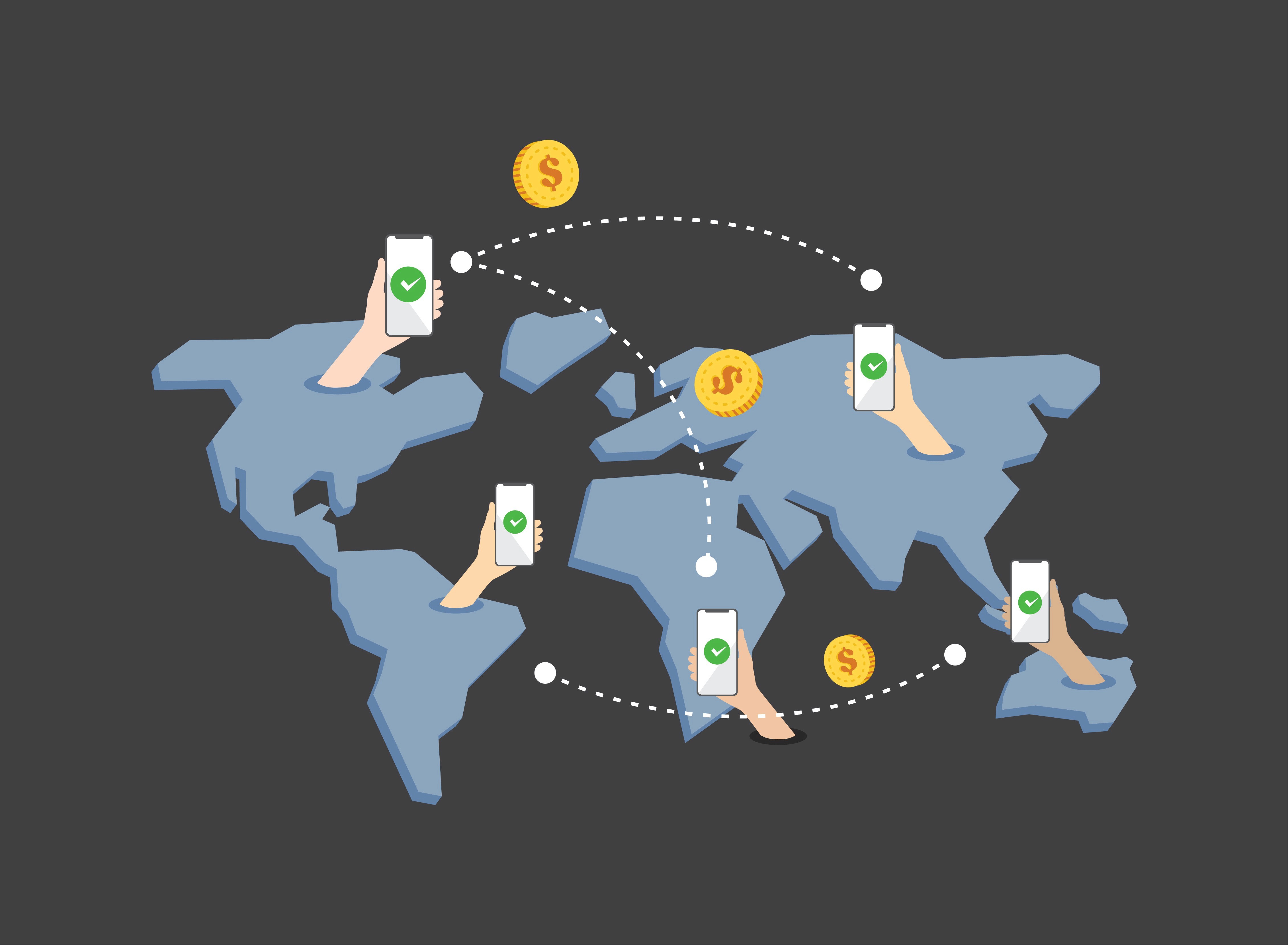
In the rapidly evolving landscape of fintech and deregulated finance, businesses are moving away from building complex infrastructure in-house. Instead, they are leveraging API-driven solutions to integrate financial capabilities directly into their platforms. At the heart of this shift is a critical question for modern CFOs and product leaders: What is Wallet as a Service, and how can it transform your B2B operations?
Wallet as a Service (WaaS) is an enterprise-grade infrastructure that allows businesses to embed digital wallets into their applications using APIs and SDKs. Rather than spending months developing blockchain connectivity, security protocols, and key management systems from scratch, companies use WaaS to deploy secure, compliant wallets instantly. For B2B entities, this is not about "crypto speculation"; it is about modernising settlement rails to reduce friction and cost.
What You Will Learn
The technical and functional definition of Wallet as a Service.
The difference between B2C perception and B2B utility.
Safety, compliance, and regulatory considerations for enterprises.
A real-world B2B scenario demonstrating WaaS in action.
How Damisa’s "white glove" approach solves liquidity and settlement challenges.
Defining Wallet as a Service (WaaS) for Business
To understand the value proposition, we must look under the hood. WaaS abstracts the complexity of blockchain interaction, allowing companies to treat digital assets, whether stablecoins or tokenised real-world assets—as easily as they treat fiat currency in a traditional bank API.
The Tech Stack: APIs and MPC
At its core, WaaS is a developer toolkit. It utilises Multi-Party Computation (MPC) technology to split private keys into multiple "shares".
This ensures that no single point of failure exists; a hacker cannot access funds by compromising a single server. This infrastructure allows businesses to offer:
Instant account creation: Generating millions of wallets programmatically.
Transaction signing: Automating complex approval flows without manual intervention.
Chain agnosticism: Interacting with multiple blockchains (Ethereum, Polygon, Solana, etc.) through a single interface.
For a deeper dive into the automation capabilities of this technology, read our guide on Understanding Programmable Wallets: The Automation Engine Behind Modern B2B Finance.
Custodial vs. Non-Custodial Models
WaaS providers typically offer two distinct models:
Custodial: The provider manages the keys and compliance. This is often preferred by B2B entities who want a "hands-off" experience similar to traditional banking.
Non-Custodial: The end-user controls the keys. While popular in B2C Web3 apps, this introduces recovery challenges for businesses.
For B2B operations, the choice often comes down to liability and control. Damisa helps navigate these choices to ensure your treasury is both accessible and secure.
Core Services and Functionality of WaaS
It is not just about holding funds; it is about moving them. A robust Wallet as a Service ecosystem provides the rails for global commerce.
On-Ramps and Off-Ramps
A wallet is useless without liquidity. WaaS solutions must seamlessly bridge the gap between traditional fiat banking (USD, EUR, GBP) and digital finance.
This bridge is known as on-ramping (fiat to crypto) and off-ramping (crypto to fiat). For businesses, this functionality is critical for paying suppliers in their local currency while utilising stablecoins for the transfer.
Learn more about how this bridge functions in our article: On-ramps and Off-ramps Explained: The Bridge Between Fiat and Digital Finance for Business.
Tokenisation and Asset Management
Beyond simple payments, WaaS enables the management of sophisticated assets. This includes Tokenisation of Real-World Assets (RWA), such as invoices or commodities, allowing them to be traded or financed instantly. WaaS provides the secure vault where these digital representations of value are stored and managed.
Is Wallet as a Service Safe and Compliant?
For a CFO, security is paramount. The perception of "crypto" often involves risk, but enterprise WaaS is built on bank-grade security standards.
Security Standards and MPC
As mentioned, MPC technology removes the "single point of failure" risk.
Furthermore, top-tier WaaS providers adhere to SOC 2 Type II compliance and ISO 27001 standards.
This level of rigour is essential when comparing assets for settlement.
For instance, when choosing between stablecoins to hold in these wallets, transparency is key.
See our comparison here: USDC vs USDT for Business: The CFO’s Guide to Safer Settlements.
Regulatory Adherence (KYC/KYB)
Legitimate WaaS providers integrate Know Your Customer (KYC) and Know Your Business (KYB) checks directly into the wallet creation flow.
This ensures that every wallet generated is tied to a verified identity, preventing money laundering and ensuring compliance with global financial regulations.
This effectively "sanitises" the blockchain aspect, making it palatable for traditional finance and audit teams.
B2B Viability vs. B2C Perception
The market often conflates consumer "crypto wallets" with enterprise financial infrastructure. The distinction is vital.
The Consumer View: User Experience
In the B2C world (gaming, retail trading), WaaS is focused on "seedless" login and recovering lost passwords. The goal is to make a crypto app feel like a Web2 app.
The B2B Reality: Liquidity and Settlement
In the B2B sector, the focus is entirely different. It is about velocity of money.
WaaS allows companies to bypass legacy banking delays (SWIFT) and achieve T+0 settlement. It is not about speculation; it is about logistics and operational efficiency.
As we argue in our analysis, The Real Revolution Isn’t Crypto. It’s Cheaper Transactions, businesses do not care about the "tech", they care that the money arrives instantly and costs 80% less to send.
How Damisa Powers Wallet as a Service
Damisa goes beyond providing raw infrastructure. We offer a tailored partnership for businesses that need to move significant capital across borders.
White-Glove Solutions for CFOs
We understand that most businesses do not want to manage raw APIs.
Damisa provides the benefits of WaaS, instant wallets, secure custody, and seamless rails, wrapped in a service designed for finance teams, not just developers. We handle the complexity of liquidity management so you can focus on your core business.
To understand our unique position in the market, read Why Damisa is the Premier Stablecoin Payments Partner for Modern Business.
Solving the Liquidity Problem
Many WaaS providers give you a wallet but leave you to find the liquidity.
Damisa integrates deep liquidity pools, ensuring that when you need to move $1M or $10M, the funds are available and the exchange rates are competitive.
Real-World B2B Scenario: Supply Chain Optimisation
How does this look in practice? Let us examine a typical use case involving cross-border trade.
The Challenge: Demurrage and Delays
A UK-based manufacturer needs to pay a supplier in Brazil to release cargo at a port. Using traditional banking (SWIFT), the payment takes 3-4 days. During this time, the cargo sits at the port, accruing massive Demurrage Costs.
The Solution: Embedded WaaS
By utilising Damisa's infrastructure:
The UK manufacturer funds their Damisa business wallet instantly via local bank transfer.
The funds are converted to a stablecoin and transmitted to the Brazilian supplier's wallet in seconds.
The supplier off-ramps the digital currency to Brazilian Real immediately.
Result: The payment is confirmed in minutes, the cargo is released, and demurrage fees are eliminated.
This is the power of Blockchain in Commodity Trading.
What to Look Out For and How to Compare
Not all WaaS providers are created equal. When vetting a partner, you must look beyond the marketing fluff.
Key Selection Criteria
Licensing: Are they regulated in reputable jurisdictions?
Insurance: Is there insurance on assets held in custody?
Support: Do they offer 24/7 support for critical transaction issues?
We have compiled a checklist to help you navigate this: 10 Questions to Ask When Vetting a Stablecoin Payments Partner.
Red Flags
Avoid providers who cannot clearly explain their custody model or who rely on "proprietary" (untested) security algorithms. If they cannot demonstrate how they segregate client funds from their own operational funds, walk away.
FAQ
Is Wallet as a Service legal for B2B transactions?
Yes.
When provided by a regulated entity that adheres to KYB/KYC and anti-money laundering (AML) laws, WaaS is a fully legal infrastructure for managing digital assets and payments.
Do I need to understand blockchain code to use WaaS?
No.
The "Service" part of WaaS means the provider handles the blockchain complexity. You interact with it via a standard dashboard or simple API, much like your current online banking.
How does WaaS differ from a standard crypto exchange?
A crypto exchange is designed for trading and speculation. WaaS is infrastructure designed for integration, automation, and specific business utility (like payouts or treasury management).
Can WaaS replace my business bank account?
Not entirely yet.
WaaS complements your bank account by handling cross-border and high-speed transactions where banks fail. It acts as a turbo-charged layer on top of your traditional finance stack.
Conclusion
What is Wallet as a Service? It is the inevitable evolution of business banking. It represents the shift from slow, siloed, and expensive legacy rails to an interconnected, instant, and programmable financial future.
For B2B entities, the risks of ignoring this shift are high. Competitors leveraging WaaS are settling payments faster, cutting costs by up to 80%, and expanding into emerging markets with ease.
Don't let your treasury get stuck in the slow lane.
Ready to modernise your financial infrastructure?
In the rapidly evolving landscape of fintech and deregulated finance, businesses are moving away from building complex infrastructure in-house. Instead, they are leveraging API-driven solutions to integrate financial capabilities directly into their platforms. At the heart of this shift is a critical question for modern CFOs and product leaders: What is Wallet as a Service, and how can it transform your B2B operations?
Wallet as a Service (WaaS) is an enterprise-grade infrastructure that allows businesses to embed digital wallets into their applications using APIs and SDKs. Rather than spending months developing blockchain connectivity, security protocols, and key management systems from scratch, companies use WaaS to deploy secure, compliant wallets instantly. For B2B entities, this is not about "crypto speculation"; it is about modernising settlement rails to reduce friction and cost.
What You Will Learn
The technical and functional definition of Wallet as a Service.
The difference between B2C perception and B2B utility.
Safety, compliance, and regulatory considerations for enterprises.
A real-world B2B scenario demonstrating WaaS in action.
How Damisa’s "white glove" approach solves liquidity and settlement challenges.
Defining Wallet as a Service (WaaS) for Business
To understand the value proposition, we must look under the hood. WaaS abstracts the complexity of blockchain interaction, allowing companies to treat digital assets, whether stablecoins or tokenised real-world assets—as easily as they treat fiat currency in a traditional bank API.
The Tech Stack: APIs and MPC
At its core, WaaS is a developer toolkit. It utilises Multi-Party Computation (MPC) technology to split private keys into multiple "shares".
This ensures that no single point of failure exists; a hacker cannot access funds by compromising a single server. This infrastructure allows businesses to offer:
Instant account creation: Generating millions of wallets programmatically.
Transaction signing: Automating complex approval flows without manual intervention.
Chain agnosticism: Interacting with multiple blockchains (Ethereum, Polygon, Solana, etc.) through a single interface.
For a deeper dive into the automation capabilities of this technology, read our guide on Understanding Programmable Wallets: The Automation Engine Behind Modern B2B Finance.
Custodial vs. Non-Custodial Models
WaaS providers typically offer two distinct models:
Custodial: The provider manages the keys and compliance. This is often preferred by B2B entities who want a "hands-off" experience similar to traditional banking.
Non-Custodial: The end-user controls the keys. While popular in B2C Web3 apps, this introduces recovery challenges for businesses.
For B2B operations, the choice often comes down to liability and control. Damisa helps navigate these choices to ensure your treasury is both accessible and secure.
Core Services and Functionality of WaaS
It is not just about holding funds; it is about moving them. A robust Wallet as a Service ecosystem provides the rails for global commerce.
On-Ramps and Off-Ramps
A wallet is useless without liquidity. WaaS solutions must seamlessly bridge the gap between traditional fiat banking (USD, EUR, GBP) and digital finance.
This bridge is known as on-ramping (fiat to crypto) and off-ramping (crypto to fiat). For businesses, this functionality is critical for paying suppliers in their local currency while utilising stablecoins for the transfer.
Learn more about how this bridge functions in our article: On-ramps and Off-ramps Explained: The Bridge Between Fiat and Digital Finance for Business.
Tokenisation and Asset Management
Beyond simple payments, WaaS enables the management of sophisticated assets. This includes Tokenisation of Real-World Assets (RWA), such as invoices or commodities, allowing them to be traded or financed instantly. WaaS provides the secure vault where these digital representations of value are stored and managed.
Is Wallet as a Service Safe and Compliant?
For a CFO, security is paramount. The perception of "crypto" often involves risk, but enterprise WaaS is built on bank-grade security standards.
Security Standards and MPC
As mentioned, MPC technology removes the "single point of failure" risk.
Furthermore, top-tier WaaS providers adhere to SOC 2 Type II compliance and ISO 27001 standards.
This level of rigour is essential when comparing assets for settlement.
For instance, when choosing between stablecoins to hold in these wallets, transparency is key.
See our comparison here: USDC vs USDT for Business: The CFO’s Guide to Safer Settlements.
Regulatory Adherence (KYC/KYB)
Legitimate WaaS providers integrate Know Your Customer (KYC) and Know Your Business (KYB) checks directly into the wallet creation flow.
This ensures that every wallet generated is tied to a verified identity, preventing money laundering and ensuring compliance with global financial regulations.
This effectively "sanitises" the blockchain aspect, making it palatable for traditional finance and audit teams.
B2B Viability vs. B2C Perception
The market often conflates consumer "crypto wallets" with enterprise financial infrastructure. The distinction is vital.
The Consumer View: User Experience
In the B2C world (gaming, retail trading), WaaS is focused on "seedless" login and recovering lost passwords. The goal is to make a crypto app feel like a Web2 app.
The B2B Reality: Liquidity and Settlement
In the B2B sector, the focus is entirely different. It is about velocity of money.
WaaS allows companies to bypass legacy banking delays (SWIFT) and achieve T+0 settlement. It is not about speculation; it is about logistics and operational efficiency.
As we argue in our analysis, The Real Revolution Isn’t Crypto. It’s Cheaper Transactions, businesses do not care about the "tech", they care that the money arrives instantly and costs 80% less to send.
How Damisa Powers Wallet as a Service
Damisa goes beyond providing raw infrastructure. We offer a tailored partnership for businesses that need to move significant capital across borders.
White-Glove Solutions for CFOs
We understand that most businesses do not want to manage raw APIs.
Damisa provides the benefits of WaaS, instant wallets, secure custody, and seamless rails, wrapped in a service designed for finance teams, not just developers. We handle the complexity of liquidity management so you can focus on your core business.
To understand our unique position in the market, read Why Damisa is the Premier Stablecoin Payments Partner for Modern Business.
Solving the Liquidity Problem
Many WaaS providers give you a wallet but leave you to find the liquidity.
Damisa integrates deep liquidity pools, ensuring that when you need to move $1M or $10M, the funds are available and the exchange rates are competitive.
Real-World B2B Scenario: Supply Chain Optimisation
How does this look in practice? Let us examine a typical use case involving cross-border trade.
The Challenge: Demurrage and Delays
A UK-based manufacturer needs to pay a supplier in Brazil to release cargo at a port. Using traditional banking (SWIFT), the payment takes 3-4 days. During this time, the cargo sits at the port, accruing massive Demurrage Costs.
The Solution: Embedded WaaS
By utilising Damisa's infrastructure:
The UK manufacturer funds their Damisa business wallet instantly via local bank transfer.
The funds are converted to a stablecoin and transmitted to the Brazilian supplier's wallet in seconds.
The supplier off-ramps the digital currency to Brazilian Real immediately.
Result: The payment is confirmed in minutes, the cargo is released, and demurrage fees are eliminated.
This is the power of Blockchain in Commodity Trading.
What to Look Out For and How to Compare
Not all WaaS providers are created equal. When vetting a partner, you must look beyond the marketing fluff.
Key Selection Criteria
Licensing: Are they regulated in reputable jurisdictions?
Insurance: Is there insurance on assets held in custody?
Support: Do they offer 24/7 support for critical transaction issues?
We have compiled a checklist to help you navigate this: 10 Questions to Ask When Vetting a Stablecoin Payments Partner.
Red Flags
Avoid providers who cannot clearly explain their custody model or who rely on "proprietary" (untested) security algorithms. If they cannot demonstrate how they segregate client funds from their own operational funds, walk away.
FAQ
Is Wallet as a Service legal for B2B transactions?
Yes.
When provided by a regulated entity that adheres to KYB/KYC and anti-money laundering (AML) laws, WaaS is a fully legal infrastructure for managing digital assets and payments.
Do I need to understand blockchain code to use WaaS?
No.
The "Service" part of WaaS means the provider handles the blockchain complexity. You interact with it via a standard dashboard or simple API, much like your current online banking.
How does WaaS differ from a standard crypto exchange?
A crypto exchange is designed for trading and speculation. WaaS is infrastructure designed for integration, automation, and specific business utility (like payouts or treasury management).
Can WaaS replace my business bank account?
Not entirely yet.
WaaS complements your bank account by handling cross-border and high-speed transactions where banks fail. It acts as a turbo-charged layer on top of your traditional finance stack.
Conclusion
What is Wallet as a Service? It is the inevitable evolution of business banking. It represents the shift from slow, siloed, and expensive legacy rails to an interconnected, instant, and programmable financial future.
For B2B entities, the risks of ignoring this shift are high. Competitors leveraging WaaS are settling payments faster, cutting costs by up to 80%, and expanding into emerging markets with ease.
Don't let your treasury get stuck in the slow lane.
Ready to modernise your financial infrastructure?
In the rapidly evolving landscape of fintech and deregulated finance, businesses are moving away from building complex infrastructure in-house. Instead, they are leveraging API-driven solutions to integrate financial capabilities directly into their platforms. At the heart of this shift is a critical question for modern CFOs and product leaders: What is Wallet as a Service, and how can it transform your B2B operations?
Wallet as a Service (WaaS) is an enterprise-grade infrastructure that allows businesses to embed digital wallets into their applications using APIs and SDKs. Rather than spending months developing blockchain connectivity, security protocols, and key management systems from scratch, companies use WaaS to deploy secure, compliant wallets instantly. For B2B entities, this is not about "crypto speculation"; it is about modernising settlement rails to reduce friction and cost.
What You Will Learn
The technical and functional definition of Wallet as a Service.
The difference between B2C perception and B2B utility.
Safety, compliance, and regulatory considerations for enterprises.
A real-world B2B scenario demonstrating WaaS in action.
How Damisa’s "white glove" approach solves liquidity and settlement challenges.
Defining Wallet as a Service (WaaS) for Business
To understand the value proposition, we must look under the hood. WaaS abstracts the complexity of blockchain interaction, allowing companies to treat digital assets, whether stablecoins or tokenised real-world assets—as easily as they treat fiat currency in a traditional bank API.
The Tech Stack: APIs and MPC
At its core, WaaS is a developer toolkit. It utilises Multi-Party Computation (MPC) technology to split private keys into multiple "shares".
This ensures that no single point of failure exists; a hacker cannot access funds by compromising a single server. This infrastructure allows businesses to offer:
Instant account creation: Generating millions of wallets programmatically.
Transaction signing: Automating complex approval flows without manual intervention.
Chain agnosticism: Interacting with multiple blockchains (Ethereum, Polygon, Solana, etc.) through a single interface.
For a deeper dive into the automation capabilities of this technology, read our guide on Understanding Programmable Wallets: The Automation Engine Behind Modern B2B Finance.
Custodial vs. Non-Custodial Models
WaaS providers typically offer two distinct models:
Custodial: The provider manages the keys and compliance. This is often preferred by B2B entities who want a "hands-off" experience similar to traditional banking.
Non-Custodial: The end-user controls the keys. While popular in B2C Web3 apps, this introduces recovery challenges for businesses.
For B2B operations, the choice often comes down to liability and control. Damisa helps navigate these choices to ensure your treasury is both accessible and secure.
Core Services and Functionality of WaaS
It is not just about holding funds; it is about moving them. A robust Wallet as a Service ecosystem provides the rails for global commerce.
On-Ramps and Off-Ramps
A wallet is useless without liquidity. WaaS solutions must seamlessly bridge the gap between traditional fiat banking (USD, EUR, GBP) and digital finance.
This bridge is known as on-ramping (fiat to crypto) and off-ramping (crypto to fiat). For businesses, this functionality is critical for paying suppliers in their local currency while utilising stablecoins for the transfer.
Learn more about how this bridge functions in our article: On-ramps and Off-ramps Explained: The Bridge Between Fiat and Digital Finance for Business.
Tokenisation and Asset Management
Beyond simple payments, WaaS enables the management of sophisticated assets. This includes Tokenisation of Real-World Assets (RWA), such as invoices or commodities, allowing them to be traded or financed instantly. WaaS provides the secure vault where these digital representations of value are stored and managed.
Is Wallet as a Service Safe and Compliant?
For a CFO, security is paramount. The perception of "crypto" often involves risk, but enterprise WaaS is built on bank-grade security standards.
Security Standards and MPC
As mentioned, MPC technology removes the "single point of failure" risk.
Furthermore, top-tier WaaS providers adhere to SOC 2 Type II compliance and ISO 27001 standards.
This level of rigour is essential when comparing assets for settlement.
For instance, when choosing between stablecoins to hold in these wallets, transparency is key.
See our comparison here: USDC vs USDT for Business: The CFO’s Guide to Safer Settlements.
Regulatory Adherence (KYC/KYB)
Legitimate WaaS providers integrate Know Your Customer (KYC) and Know Your Business (KYB) checks directly into the wallet creation flow.
This ensures that every wallet generated is tied to a verified identity, preventing money laundering and ensuring compliance with global financial regulations.
This effectively "sanitises" the blockchain aspect, making it palatable for traditional finance and audit teams.
B2B Viability vs. B2C Perception
The market often conflates consumer "crypto wallets" with enterprise financial infrastructure. The distinction is vital.
The Consumer View: User Experience
In the B2C world (gaming, retail trading), WaaS is focused on "seedless" login and recovering lost passwords. The goal is to make a crypto app feel like a Web2 app.
The B2B Reality: Liquidity and Settlement
In the B2B sector, the focus is entirely different. It is about velocity of money.
WaaS allows companies to bypass legacy banking delays (SWIFT) and achieve T+0 settlement. It is not about speculation; it is about logistics and operational efficiency.
As we argue in our analysis, The Real Revolution Isn’t Crypto. It’s Cheaper Transactions, businesses do not care about the "tech", they care that the money arrives instantly and costs 80% less to send.
How Damisa Powers Wallet as a Service
Damisa goes beyond providing raw infrastructure. We offer a tailored partnership for businesses that need to move significant capital across borders.
White-Glove Solutions for CFOs
We understand that most businesses do not want to manage raw APIs.
Damisa provides the benefits of WaaS, instant wallets, secure custody, and seamless rails, wrapped in a service designed for finance teams, not just developers. We handle the complexity of liquidity management so you can focus on your core business.
To understand our unique position in the market, read Why Damisa is the Premier Stablecoin Payments Partner for Modern Business.
Solving the Liquidity Problem
Many WaaS providers give you a wallet but leave you to find the liquidity.
Damisa integrates deep liquidity pools, ensuring that when you need to move $1M or $10M, the funds are available and the exchange rates are competitive.
Real-World B2B Scenario: Supply Chain Optimisation
How does this look in practice? Let us examine a typical use case involving cross-border trade.
The Challenge: Demurrage and Delays
A UK-based manufacturer needs to pay a supplier in Brazil to release cargo at a port. Using traditional banking (SWIFT), the payment takes 3-4 days. During this time, the cargo sits at the port, accruing massive Demurrage Costs.
The Solution: Embedded WaaS
By utilising Damisa's infrastructure:
The UK manufacturer funds their Damisa business wallet instantly via local bank transfer.
The funds are converted to a stablecoin and transmitted to the Brazilian supplier's wallet in seconds.
The supplier off-ramps the digital currency to Brazilian Real immediately.
Result: The payment is confirmed in minutes, the cargo is released, and demurrage fees are eliminated.
This is the power of Blockchain in Commodity Trading.
What to Look Out For and How to Compare
Not all WaaS providers are created equal. When vetting a partner, you must look beyond the marketing fluff.
Key Selection Criteria
Licensing: Are they regulated in reputable jurisdictions?
Insurance: Is there insurance on assets held in custody?
Support: Do they offer 24/7 support for critical transaction issues?
We have compiled a checklist to help you navigate this: 10 Questions to Ask When Vetting a Stablecoin Payments Partner.
Red Flags
Avoid providers who cannot clearly explain their custody model or who rely on "proprietary" (untested) security algorithms. If they cannot demonstrate how they segregate client funds from their own operational funds, walk away.
FAQ
Is Wallet as a Service legal for B2B transactions?
Yes.
When provided by a regulated entity that adheres to KYB/KYC and anti-money laundering (AML) laws, WaaS is a fully legal infrastructure for managing digital assets and payments.
Do I need to understand blockchain code to use WaaS?
No.
The "Service" part of WaaS means the provider handles the blockchain complexity. You interact with it via a standard dashboard or simple API, much like your current online banking.
How does WaaS differ from a standard crypto exchange?
A crypto exchange is designed for trading and speculation. WaaS is infrastructure designed for integration, automation, and specific business utility (like payouts or treasury management).
Can WaaS replace my business bank account?
Not entirely yet.
WaaS complements your bank account by handling cross-border and high-speed transactions where banks fail. It acts as a turbo-charged layer on top of your traditional finance stack.
Conclusion
What is Wallet as a Service? It is the inevitable evolution of business banking. It represents the shift from slow, siloed, and expensive legacy rails to an interconnected, instant, and programmable financial future.
For B2B entities, the risks of ignoring this shift are high. Competitors leveraging WaaS are settling payments faster, cutting costs by up to 80%, and expanding into emerging markets with ease.
Don't let your treasury get stuck in the slow lane.
Ready to modernise your financial infrastructure?
Category
News
Insights
Date Published
Jan 24, 2026
Written by

Damisaverse
Category
News
Insights
Date Published
Jan 24, 2026
Written by
Damisaverse
Category
News
Insights
Date Published
Jan 24, 2026
Written by
Damisaverse
Blog and articles
Latest insights and trends
Blog and articles
Latest insights and trends
Blog and articles
Latest insights and trends






Ready to elevate your business?

Easily adapt to changes and scale your operations with our flexible infrastructure, designed to support your business growth.
© 2026 Damisa Technologies. All rights reserved.
Ready to elevate your business?
Easily adapt to changes and scale your operations with our flexible infrastructure, designed to support your business growth.
© 2026 Damisa Technologies. All rights reserved.
Ready to elevate your business?
Easily adapt to changes and scale your operations with our flexible infrastructure, designed to support your business growth.
© 2026 Damisa Technologies. All rights reserved.